
By Sarim Suleman on July 16, 2026

A decade ago, a mid-grade felony case might have arrived with three or four recordings. Today a single misdemeanor can generate a terabyte of digital evidence, and a forensic investigator at the Denver District Attorney's Office recently put the rise in audio and video evidence at around 600 percent over five years. Axon, the largest supplier of police cameras and cloud storage, has watched its footage store grow from roughly 6 terabytes in 2016 to more than 100 petabytes. More than 80 percent of criminal cases now involve video of some kind.
The bottleneck has moved. Collecting evidence is the easy part now. Reviewing it is where cases stall. Digital forensic units routinely carry backlogs measured in months, and in some jurisdictions years, while the footage keeps arriving faster than anyone can watch it.
AI digital evidence management is the response to that arithmetic. It applies machine learning, natural language processing (NLP), computer vision, and other AI services to the parts of evidence work that do not need a person: finding the relevant clip, transcribing an interview, labeling a file, hiding a bystander's face before disclosure. The point is not to take investigators out of the loop. It is to give them back the hours they currently spend scrubbing through footage. Here is what the technology does, where it earns its place, and where it still needs a careful hand.
Challenges of traditional digital evidence management
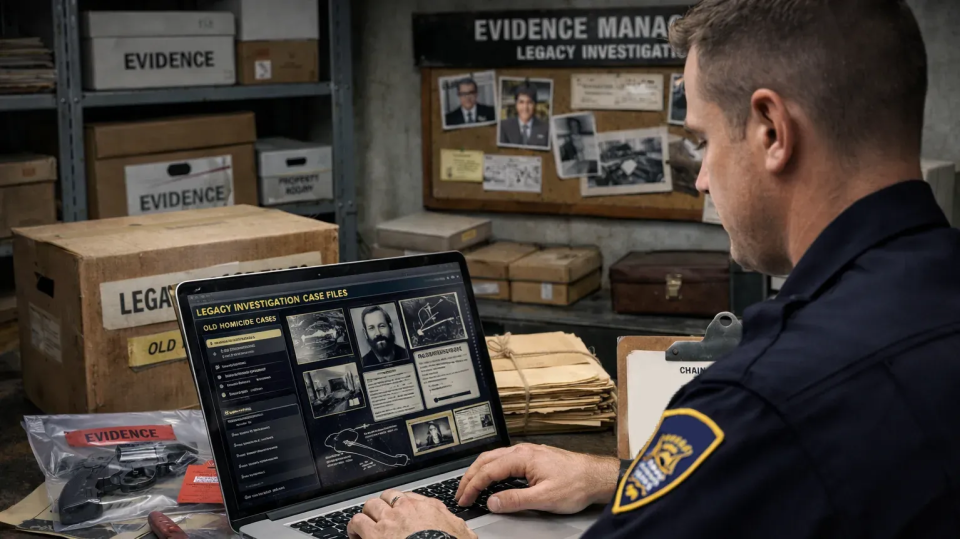
Without automation, an investigator has to sift through every file by hand. Picture a detective on a multi-jurisdictional case with 500 hours of body camera footage pulled from three departments. Before any real analysis starts, someone has to watch, catalog, and cross-reference all of it. That work can take weeks, and it scales badly as the volume climbs.
Manual labeling is also where mistakes creep in. Different officers and analysts name and file things their own way, so records end up inconsistent, duplicated, or simply lost. A misfiled clip is not just an inconvenience. It can delay a proceeding or put the admissibility of evidence in question.
Language adds another layer. Recordings come in whatever the people on them were speaking, and pulling in a human translator for every interview or intercept is slow and expensive. Transcription alone is a real tax on officer time: one survey found officers spend up to a third of their shift on report writing and documentation. Then there is privacy. Faces, license plates, minors, undercover officers, and personal data all have to be hidden before evidence can be shared or released, and doing that frame by frame by hand is both slow and easy to get wrong.
In modern investigations, handling digital evidence is crucial, but traditional methods present significant hurdles. Without AI digital evidence management, agencies struggle with inefficiencies that slow down case progress, increase the risk of errors, and create security vulnerabilities.
What is AI digital evidence management?
AI digital evidence management is the use of artificial intelligence to handle the collection, processing, analysis, and storage of digital evidence. It automates repetitive work, improves consistency, and helps preserve the integrity of files used in investigations, court, and compliance audits. The approach lines up with NIST SP 800-86, the federal guide for integrating forensic techniques into incident response.
In practice, that covers everything from search and transcription to tagging, analytics, and redaction. The sections below break down twelve specific capabilities and what each one is actually good for.
What is AI in Digital Evidence Management?
AI digital evidence management refers to the use of artificial intelligence (AI) technologies to streamline the collection, processing, analysis, and storage of digital evidence. It enhances traditional evidence management by automating repetitive tasks, improving accuracy, and ensuring the integrity of digital files used in criminal investigations, legal proceedings, and compliance audits, consistent with NIST SP 800-86 guidelines for integrating forensic techniques into incident response.
AI-powered search and retrieval for digital evidence
1. Natural language evidence querying
Officers often need a quick answer from a large evidence set without running a manual search. An AI assistant lets them ask in plain language, something like "show me every clip from the suspect's block on August 26," and get a response built from metadata, transcripts, and tags. It works in the field as well as at a desk, which cuts the downtime between a question and an answer.
2. Intelligent evidence search and instant retrieval
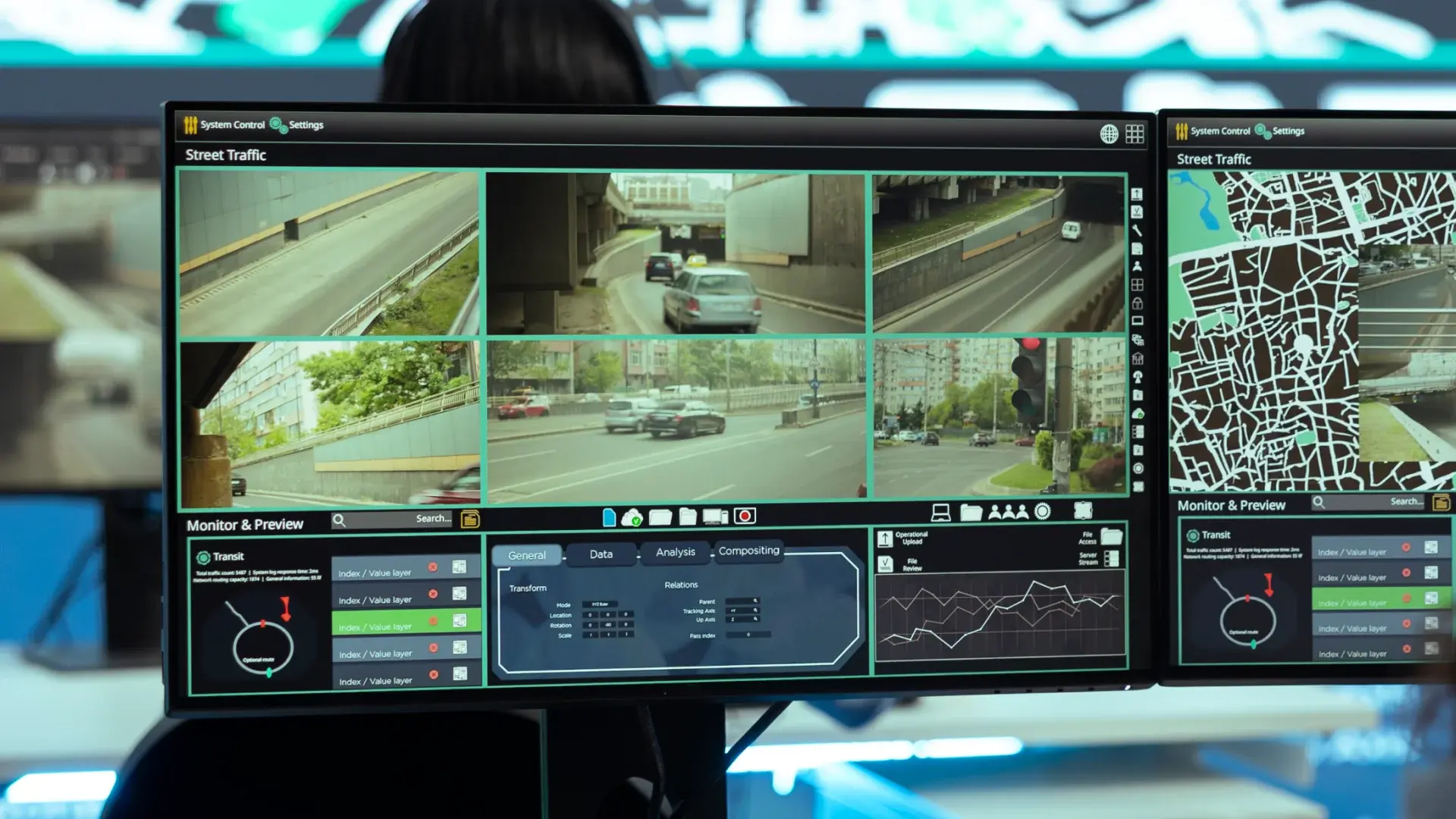
Finding one file in a large set is hard when the only tools are filenames and folders. AI-powered search lets investigators locate files, spoken words, and on-screen objects through keyword recognition, facial matching, metadata, and multilingual support. Instead of scanning hours of body camera footage, they search it the way they would search a document, which takes a real bite out of case processing time.
AI transcription, tagging, and analysis
3. AI transcription and translation
Audio and video in mixed languages turns manual transcription into a slow, error-prone job. AI transcription converts speech to searchable text, so every spoken word is on the record and indexable. It also handles translation across many languages, which lets investigators work through interviews, intercepts, and witness statements without booking a human translator for every file. That matters in cross-border cases and in linguistically diverse jurisdictions alike.
4. Automated summarization and video chaptering
Reviewing a long interview or surveillance recording end to end is rarely a good use of an investigator's time. AI summarization pulls out the key points, and automatic chaptering breaks a long recording into labeled sections so people can jump to what matters. Both help when evidence is handed to a partner agency, since the recipient can go straight to the relevant segment instead of starting from zero.
5. Smart tagging and evidence categorization
Hand-labeling evidence is exactly the kind of repetitive task that produces inconsistent results. Automated tagging reads the content, identifies the entities in it, and applies labels for you. Consistent tags mean evidence is easier to find and cross-reference later, which pays off most in large or high-profile cases with many contributors.
6. Speaker diarization for multi-speaker audio
Long recordings with several voices are hard to attribute. Speaker diarization separates a recording by speaker, so investigators can tell who said what across interrogations, intercepts, and courtroom audio. Accurate attribution removes a lot of the ambiguity that otherwise surrounds recorded statements. (Worth noting for accuracy: the term is diarization, not "dualization," and it identifies distinct speakers rather than naming them.)
7. OCR for scanned document evidence
Plenty of evidence is text trapped inside a scan or a photograph. OCR pulls that text out and makes it searchable and editable, so case reports, records, and official documents become part of the same searchable index as everything else. Pattern-based extraction can also target specific fields, which helps when the same kind of detail has to be found across hundreds of pages.
AI video analytics for investigations
8. Real-time video analytics
Most evidence review happens after the fact. Real-time analytics works on live feeds from body cams, fixed cameras, or drones, using computer vision to flag things like an unattended object or a sudden crowd movement as they happen. Used in patrol or event settings, it turns a passive camera into an alerting one, with the analyst still making the call on what the alert means.
9. Activity recognition in surveillance footage
Scrubbing hours of surveillance for the one moment that matters is slow. Activity recognition detects actions in video and flags them, which points an investigator at the relevant minutes instead of the whole tape. It is useful for crime scene review, public safety monitoring, and fraud work, and like any flag, it is a starting point for human review rather than a conclusion.
10. Emotion and sentiment analysis
Sentiment and emotion analysis reads facial expression, tone, and speech patterns and labels them as signals such as agitation or distress. It can help an investigator decide where to look more closely in a long interview. It is worth being honest about the limits here: the science linking expressions to inner states is contested, results vary across people and cultures, and these labels should be treated as leads to verify, never as proof of guilt, deception, or intent.
11. Facial attribute recognition
Facial attribute recognition estimates characteristics such as approximate age and other visible attributes to help narrow a pool of possible matches in missing-person, trafficking, and forensic work, where speed can matter a great deal. Because demographic estimation carries real risks of bias and misidentification, it belongs under human oversight, clear policy, and the same scrutiny any investigative lead receives, not as an automatic identification on its own.
AI redaction and secure evidence sharing
12. Automated video redaction
Before evidence can be shared with another agency or released to the public, sensitive details have to come out: faces, license plates, minors, undercover officers, and personal data. AI redaction detects those elements and tracks them across frames, so a face stays covered for the length of a clip without anyone editing it by hand. Agencies can choose how each item is obscured, whether that means blurring, pixelation, or a solid blackout, and apply it consistently across long recordings.
That consistency is what makes disclosure practical at scale. It helps agencies meet privacy and disclosure obligations under the GDPR (Articles 17 and 25), the FBI CJIS Security Policy, and HIPAA (Security Rule, 45 CFR 164.312), and it lets them answer public records requests and share files across agencies without exposing what the law says they cannot.
Benefits of AI in evidence management
The common thread across all twelve is time. Work that used to take hours, finding a clip, transcribing an interview, labeling a batch of files, redacting a video, comes down to minutes, which lets law enforcement teams spend their attention on the case rather than the file system. There is a budget dimension too. One Virginia working group estimated agencies needed roughly one additional staff position for every 75 body cameras just to handle the footage, which is the kind of cost automation is meant to take off the table. Controlling that cost is a large part of why agencies adopt the technology in the first place.
Consistency is the second payoff. Automatic tagging and indexing reduce the misfiled-and-forgotten problem that undermines manual systems, which produces cleaner case files that hold up better under scrutiny. The third is scale. As evidence volume climbs, an automated pipeline keeps pace in a way a manual one cannot, which keeps large investigations organized for prosecutors and public defenders working the same files.
VIDIZMO DEMS: AI-powered digital evidence management in practice
The clearest way to see the difference is a working deployment. The State of Georgia Attorney General's Office was managing evidence for gang and child-trafficking cases across 29 law enforcement agencies, with files scattered on flash drives, hard drives, and CDs. That setup was both a security risk and a barrier to sharing under the Georgia Open Records Act and the state's data-sharing policy.
With VIDIZMO Digital Evidence Management System (DEMS), the office moved evidence into a single repository, organized by case and retrievable through AI-powered search and automatic tagging. Role-based access control limited who could see what, audit logs recorded every action, and tamper verification protected file integrity. Audio and video redaction let the office hide sensitive details before releasing files publicly. The result was evidence shared securely across all 29 agencies, with quicker retrieval and a clear, traceable record of access. You can read the rest of the DEMS case studies for similar work at the California DMV, Adams County Sheriff's Office, and others.
Compliance is part of why agencies can use it on real CJI. VIDIZMO DEMS is built to support compliance with the FBI CJIS Security Policy, which today means version 5.9.5, the baseline used for audits through March 2027, while agencies prepare for the modernized version 6.0 that aligns CJIS with NIST SP 800-53 and takes full effect by October 2027. Evidence is encrypted in transit and at rest, access is controlled and logged, and the platform connects to body cameras, fixed cameras, and forensic tools so the full evidence lifecycle lives in one place. You can see the complete feature set for the specifics.
The future of AI in evidence management
The next step people talk about is agentic AI: systems that chain these capabilities together so intake, transcription, tagging, and a first-pass redaction happen automatically as evidence arrives, with a person reviewing the output rather than doing the work. That would take more of the manual load off investigators and shorten the path from collection to a usable file.
The caution worth keeping is that more automation does not mean less oversight. The capabilities that touch identity and behavior, the emotion and facial-attribute tools especially, get more consequential as they speed up, not less. The agencies that get value from this are the ones that pair the automation with clear policy and human judgment on anything that affects a person's case. The evidence will keep growing either way. The question is whether the review process grows with it.

About the Author

Jump to

OCR for Digital Evidence Management: Making Docs & Images Searchable
AI in Digital Evidence Analysis: A Practical Guide for Investigators

No Comments Yet
Let us know what you think