
By Ali Rind on April 2, 2026
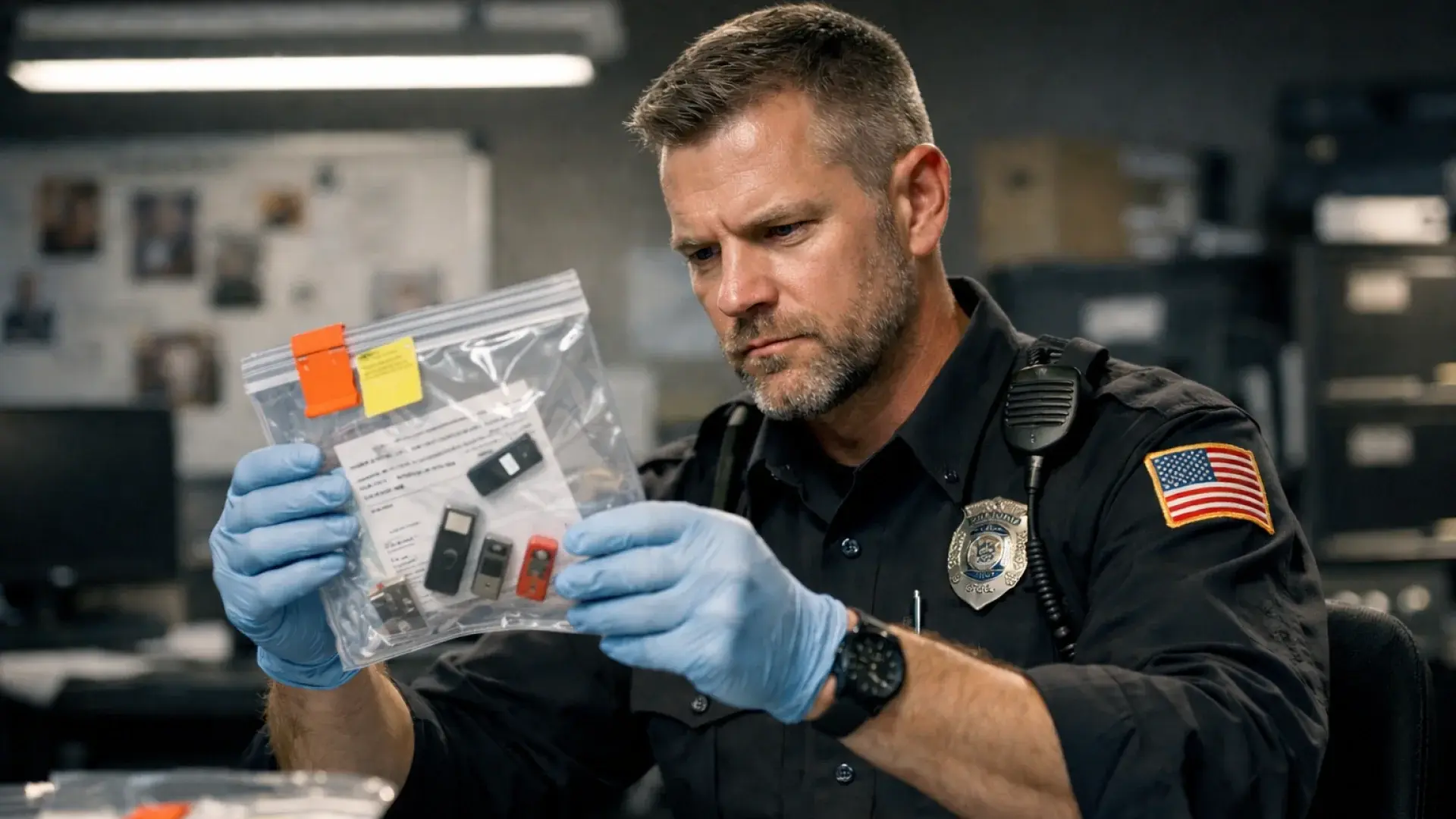
Police agencies rarely question their evidence management approach when it is first implemented. It usually works well enough. Files are stored, cases move forward, and requests are handled with some effort.
The pressure builds quietly over time. Evidence takes longer to locate. Staff rely on informal workarounds to meet deadlines. Disclosure requests feel heavier than they should. Audits require more explanation than confidence. None of these issues alone signal failure, but together they indicate something important: the system is being pushed beyond what it was designed to handle.
This is the point where police evidence management stops being a background function and becomes an operational constraint. Not because the team is underperforming, but because the environment has changed faster than the tools supporting it.
This article examines the practical signs that an evidence management approach has reached its limits, and why those signals matter before legal, compliance, or operational risks become unavoidable.
1. Evidence Intake Depends on Manual Workarounds
One of the earliest signs of strain appears at the point of intake.
When officers or investigators must manually upload files, rename folders, or burn evidence to physical media, intake becomes inconsistent. Different units follow different practices. Metadata is incomplete. Critical context is lost before an investigation even begins.
Manual intake also slows operations. Officers spend valuable time managing files instead of focusing on cases, while supervisors lack clear visibility into what evidence exists and where it is stored.
Modern police evidence management requires policy-driven, automated ingestion from body-worn cameras, CCTV systems, mobile devices, and external sources. When intake depends on workarounds rather than standardized processes, scalability is already compromised.
2. Chain of Custody Is Difficult to Prove, Not Easy to Show
Chain of custody should strengthen a case, not create uncertainty.
If staff must manually compile logs, export screenshots, or reconstruct handling history during audits or court proceedings, the process is fragile. Each manual step introduces the possibility of error or doubt.
Common warning signs include:
- Separate custody logs for different evidence types
- Inconsistent timestamps across systems
- Limited visibility into who accessed evidence and when
A defensible police evidence management approach should automatically record actions across the entire evidence lifecycle. When proving chain of custody requires extra effort, the system is operating at its limit.
3. Access Control Is All or Nothing
As evidence volumes grow, managing access becomes increasingly complex.
Many agencies rely on shared folders or overly broad permissions. Investigators can access more evidence than necessary. Sensitive cases require exceptions. Internal affairs investigations and multi-agency cases introduce additional risk.
When administrators are forced to choose between convenience and control, problems follow. Overexposure increases the risk of unauthorized disclosure, while restrictive access slows investigations.
Police evidence management systems must support granular, role-based access and case-level permissions without creating administrative burden. When access control becomes a constant balancing act, the approach is no longer sustainable.
4. Disclosure and FOIA Requests Create Bottlenecks
Evidence disclosure is no longer occasional. It is continuous and time-bound.
Prosecutors, defense attorneys, internal reviewers, and public records requests all demand timely access to evidence. If responding requires exporting files, copying drives, or manually tracking what was shared, delays are inevitable.
Bottlenecks often surface as:
- Missed or rushed disclosure deadlines
- Duplicate copies of evidence circulating outside the system
- Unclear records of what was released and to whom
These issues increase legal risk and erode trust. A scalable police evidence management approach must support controlled sharing, clear audit trails, and predictable disclosure workflows.
5. Evidence Storage Costs and Complexity Keep Growing
Digital evidence grows faster than budgets.
When storage relies on ad hoc expansion or vendor-specific limitations, costs become unpredictable. Older cases are difficult to retrieve. Retention policies are applied inconsistently across systems and evidence types.
A police evidence management approach that cannot enforce retention rules, support long-term preservation, and plan storage growth strategically will struggle to keep pace with modern demands.
When storage planning becomes reactive rather than policy-driven, it is a clear sign the current approach has reached its limits.
6. Supervisors Lack Visibility Into Evidence Status
Effective oversight depends on visibility.
If supervisors cannot quickly determine which cases have incomplete evidence, which files are awaiting review, or where delays are occurring, oversight becomes informal and unreliable.
Without centralized reporting or real-time insight, agencies rely on manual updates and institutional knowledge. This increases the likelihood of missed deadlines, overlooked evidence, and inconsistent handling.
Police evidence management should provide clarity at every level. When leadership must ask rather than see, the system is no longer supporting accountability.
7. New Evidence Sources Break the System
Every new evidence source should not require a new workflow.
If adding drone footage, third-party video, or new forensic tools forces teams to rethink how evidence is handled, the approach lacks flexibility. Over time, this leads to fragmentation and inconsistent practices across cases.
A modern police evidence management approach should be source-agnostic, managing evidence consistently regardless of how it was captured. When new sources disrupt operations, the platform is already outdated.
What Reaching the Limit Really Means
Reaching the limit does not mean your team is failing. It means the environment has changed.
Evidence volumes are larger. Timelines are shorter. Expectations around transparency, accountability, and disclosure are higher. Approaches designed for a simpler era struggle under these conditions.
Recognizing the signs early allows agencies to modernize deliberately rather than react under pressure.
How Modern Digital Evidence Management Addresses These Limits
Modern digital evidence management systems are designed to support scale, accountability, and control.
They centralize evidence across sources, automate chain of custody tracking, enforce access policies, and streamline secure sharing. Most importantly, they support investigators and evidence staff without forcing changes to core policing practices.
By replacing manual workarounds with policy-driven workflows, agencies regain confidence in their evidence operations while reducing risk.
If your agency is reassessing its evidence management approach, VIDIZMO Digital Evidence Management System can help you evaluate scalable, defensible options. Schedule a meeting to explore next steps.

Key Takeaways
-
Evidence management limits usually appear as operational friction, not system failures. Increased effort is often the first warning sign.
-
When staff rely on informal workarounds to meet deadlines, the evidence process is no longer sustainable.
-
Difficulty demonstrating chain of custody, enforcing access boundaries, or responding quickly to disclosures signals hidden risk.
-
Systems that struggle to absorb new evidence sources or growing volumes are already operating beyond their design.
-
Reassessing police evidence management early helps agencies reduce legal exposure without disrupting investigative practices.
Knowing When It Is Time to Reassess
If evidence handling feels harder every year, that feeling is data.
Manual intake, access challenges, disclosure delays, and growing administrative burden are not isolated problems. They are indicators that the current police evidence management approach has reached its limits.
Reassessing evidence management is not about replacing established practices. It is about ensuring those practices are supported by systems that can scale, adapt, and withstand scrutiny.
For agencies facing these signs, the most important step is not immediate replacement, but honest evaluation. Understanding whether your evidence management approach is helping or holding you back is essential to maintaining defensibility, efficiency, and public trust.
About the Author

Jump to
.webp)
The Operational Impact of Body Worn Cameras on Police Departments

Choosing Digital Evidence Management for Small Police Departments


No Comments Yet
Let us know what you think