
By Ali Rind on April 2, 2026

Prosecutors cannot use video evidence in court unless it is properly redacted, documented, and legally defensible. Law enforcement agencies are responsible for ensuring that video evidence shared with prosecutors protects privacy, preserves evidentiary integrity, and complies with court requirements.
Preparing redacted video evidence for prosecutors involves more than obscuring faces or muting audio. Agencies must maintain the original recording, apply non-destructive redaction, document every action taken on the evidence, and securely deliver a court-ready version without breaking chain of custody. Failure to do so can delay cases, create evidentiary challenges, or result in video being excluded at trial.
As video evidence continues to play a decisive role in prosecutions, law enforcement agencies need reliable, governed tools to prepare redacted video that prosecutors can confidently present in court.
Why Redacted Video Evidence Is Required for Prosecutors
Prosecutors can only use video evidence that is court-ready, compliant, and legally defensible. Law enforcement agencies must ensure video evidence is properly redacted before it is reviewed, disclosed, or presented in court.
Redaction is required to protect privacy by removing:
- Faces of victims, witnesses, minors, and bystanders
- Sensitive audio, screens, and personal identifiers
Improper or inconsistent redaction can lead to privacy violations, evidentiary objections, and case delays.
Prosecutors also need assurance that:
- The original video remains preserved
- Redaction is applied non-destructively
- All actions are logged and auditable
- Chain of custody is maintained
Without these safeguards, redacted video evidence may be challenged or excluded at trial.
What Prosecutors Expect From Redacted Video Evidence
When receiving redacted video, prosecutors typically expect:
- Clear and consistent redaction of faces, audio, screens, or sensitive areas
- Non-destructive redaction, preserving the original evidence
- Complete audit trails documenting when and how redaction occurred
- Preserved metadata and timestamps
- Verified chain of custody from capture to delivery
- Secure access to evidence without duplication or unauthorized sharing
Meeting these expectations requires more than a standalone redaction tool.
Best Practices for Preparing Redacted Video for Prosecutors
Law enforcement agencies can improve evidence readiness by following these best practices:
- Maintain original evidence in a secure, read-only state
- Apply consistent redaction standards across cases
- Review redacted video before sharing
- Document redaction decisions and workflows
- Use secure digital sharing instead of physical media
These practices help ensure evidence admissibility and reduce rework.
Challenges in Preparing Redacted Video for Court
Law enforcement agencies commonly face challenges such as:
- Time-consuming manual or frame-by-frame redaction
- Disconnected tools for storage, redaction, and sharing
- Risk of overwriting or altering original evidence
- Loss of auditability during exports
- Difficulty tracking original and redacted versions
These challenges increase operational risk and slow down prosecutor workflows.
Key Requirements for Tools Used to Prepare Redacted Video Evidence
To prepare prosecutor-ready redacted video, agencies need tools that support:
- Centralized digital evidence storage
- Integrated video and audio redaction
- Automated or assisted redaction workflows
- Tamper-proof audit logs
- Role-based access control
- Secure evidence sharing with prosecutors
- Court-ready export formats
This is where a Digital Evidence Management System becomes essential.
How VIDIZMO Digital Evidence Management System Supports Prosecutor-Ready Video Evidence
VIDIZMO Digital Evidence Management System enables law enforcement agencies to prepare redacted video evidence efficiently and securely by providing:
- Secure ingestion of video evidence from multiple sources
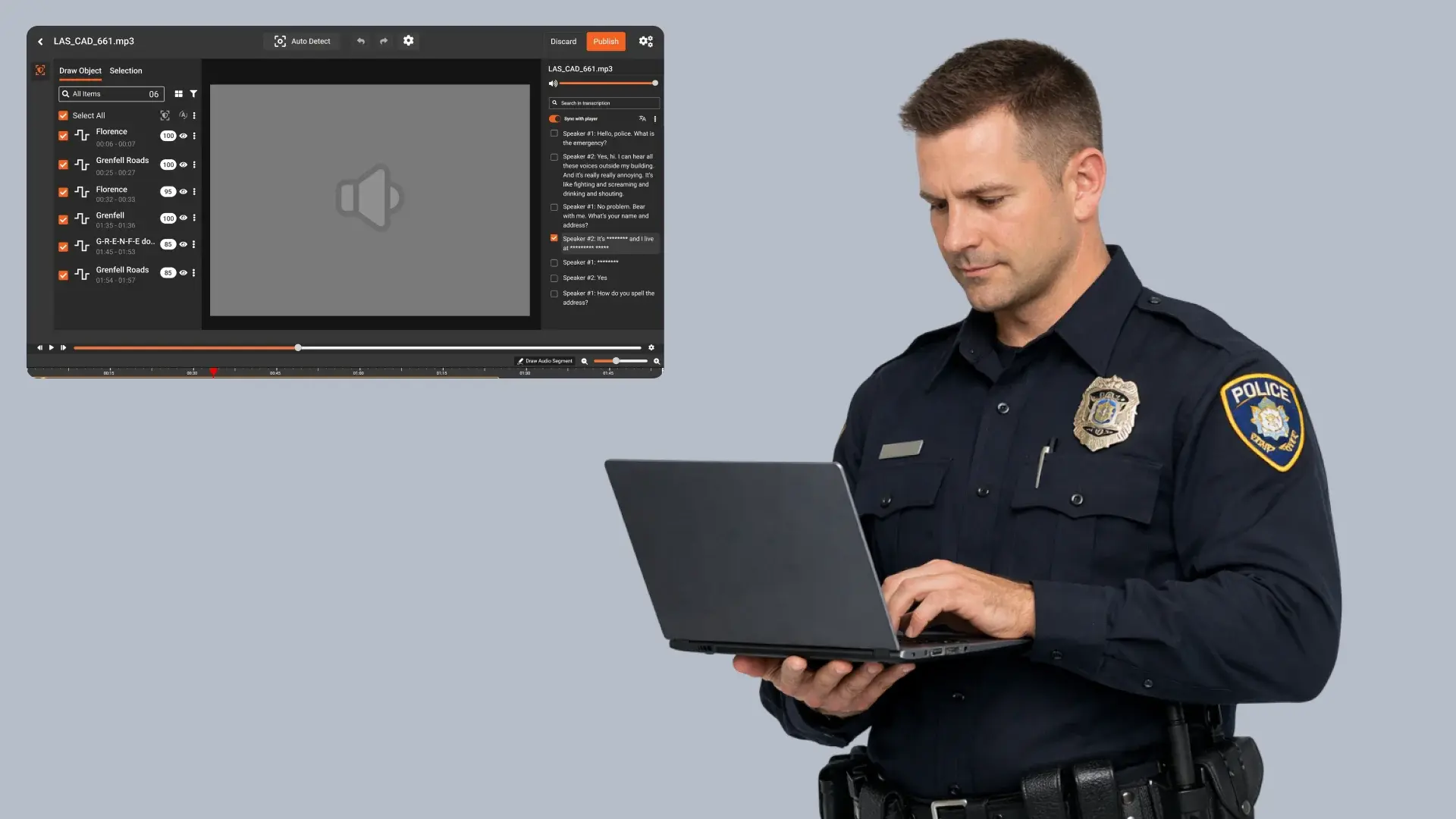
- Built-in video and audio redaction through VIDIZMO Redactor
- AI-assisted redaction to improve speed and accuracy
- Non-destructive redaction with preserved originals
- Detailed audit trails and redaction logs
- Role-based access for investigators and prosecutors
- Secure evidence sharing and controlled access
Want to streamline how redacted video evidence is prepared for prosecutors?
Schedule a meeting to see how VIDIZMO Digital Evidence Management System helps law enforcement agencies manage, redact, and securely share court-ready video evidence while preserving chain of custody and evidentiary integrity.

Key Takeaways
-
Prosecutors can only use video evidence that is properly redacted, documented, and legally defensible.
-
Redaction is required to protect privacy, prevent jury bias, and comply with court and disclosure requirements.
-
Original and redacted versions of video evidence must be clearly linked and version-controlled.
-
Complete audit trails are required to document when, how, and by whom redaction was performed.
-
Chain of custody must remain intact from evidence capture through courtroom presentation.
-
Manual or inconsistent redaction increases the risk of evidentiary challenges, rework, and case delays.
-
Prosecutors expect secure, controlled access to redacted video without unauthorized duplication or sharing.
-
Preparing redacted video evidence involves the entire evidence lifecycle, not just the redaction step.
-
A governed, end-to-end evidence workflow is essential for delivering court-ready video evidence with confidence.
Ensuring Redacted Video Evidence Is Court-Ready and Defensible
Preparing redacted video evidence for prosecutors requires accuracy, accountability, and strict evidence governance. Law enforcement agencies must ensure that privacy is protected, original recordings remain intact, and every action taken on video evidence is fully documented.
Redaction performed without proper controls increases the risk of evidentiary challenges, case delays, and exclusion of video evidence at trial. To avoid these outcomes, agencies need a centralized approach that supports non-destructive redaction, complete audit trails, and secure evidence handling throughout the prosecution process.
When redacted video evidence is prepared within a governed workflow, prosecutors receive court-ready video they can confidently review, disclose, and present, helping cases move forward efficiently and without unnecessary legal risk.
About the Author

Jump to

How to Trim and Share Video Evidence Securely
Audio Redaction in Law Enforcement: Why Removing Spoken PII Is Harder
.webp)

No Comments Yet
Let us know what you think