
By Ali Rind on December 26, 2025

Digital evidence is the backbone of modern investigations, litigation, and compliance workflows. Organizations handling sensitive video, audio, image, and document evidence cannot afford downtime, data loss, or process disruption when adopting a new Digital Evidence Management System.
VIDIZMO Digital Evidence Management System (DEMS) is designed to modernize evidence handling while maintaining operational continuity. However, successful implementation requires a structured roadmap that prioritizes active cases, chain of custody, and stakeholder confidence.
This guide outlines a practical, step by step roadmap for implementing VIDIZMO DEMS without disrupting ongoing investigations or legal matters.
Why Careful DEMS Implementation Matters
Active cases depend on uninterrupted access to evidence, secure workflows, and verifiable audit trails. A poorly planned transition can result in:
- Temporary loss of evidence access
- Broken chain of custody
- Delays in investigations or court proceedings
- Compliance and admissibility risks
- Resistance from users and investigators
A phased, well governed rollout of VIDIZMO Digital Evidence Management System (DEMS) eliminates these risks while unlocking long term efficiency and security benefits.
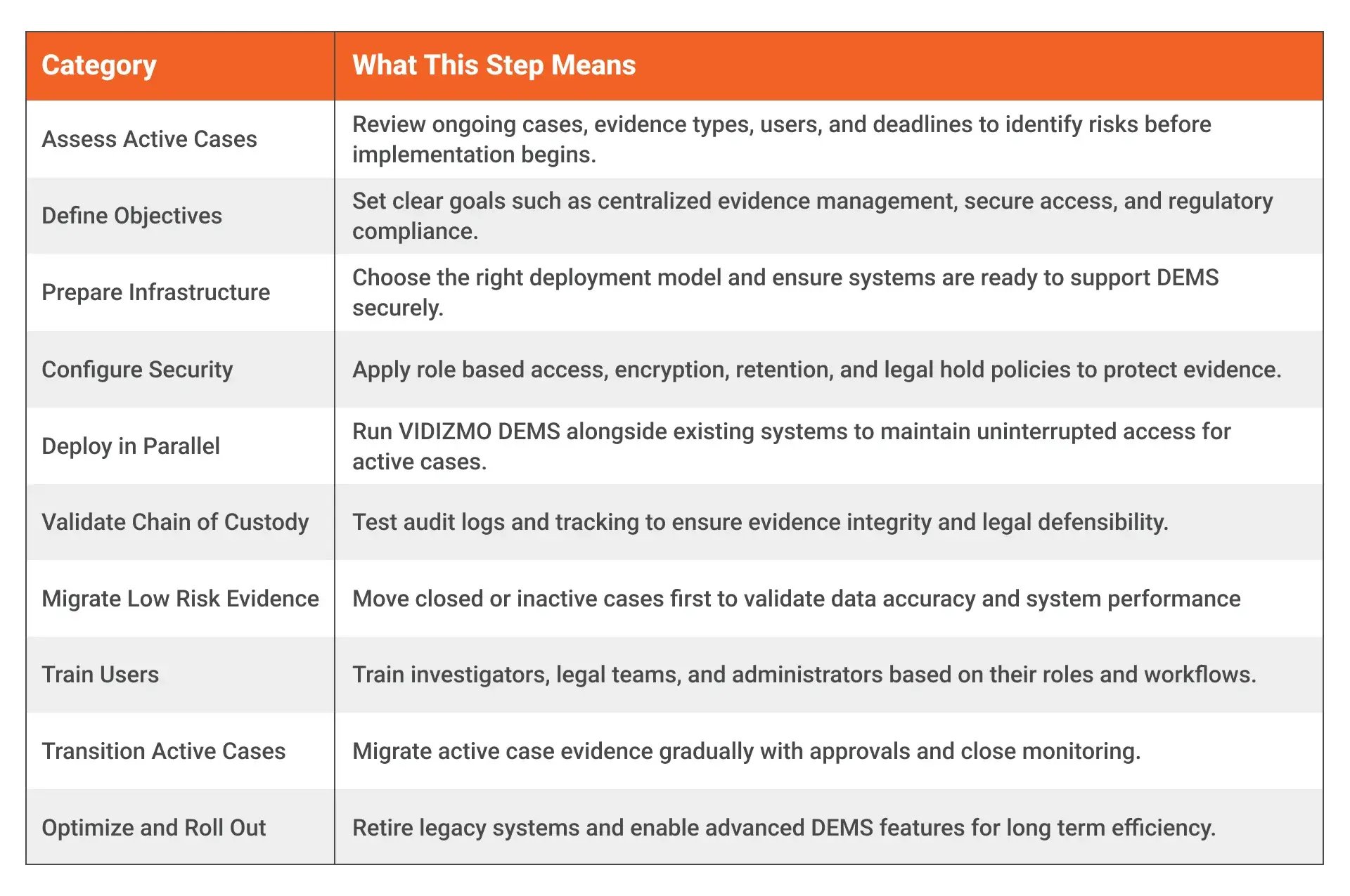
Phase 1: Assessment and Pre Implementation Planning
Identify Active Case Dependencies
Start by mapping all active cases and their evidence requirements. This includes:
- Types of digital evidence in use
- Storage locations and formats
- Users who frequently access the evidence
- Deadlines such as court dates or disclosures
This assessment ensures that high risk cases remain untouched during early phases of deployment.
Define Implementation Objectives
Clarify what success looks like. Common goals include:
- Centralized digital evidence storage
- Improved chain of custody tracking
- Faster evidence sharing with prosecutors or courts
- Compliance with CJIS, GDPR, HIPAA, or FOIA
Clear objectives help align IT, legal, and investigative teams.
Phase 2: Infrastructure and Security Readiness
Choose the Right Deployment Model
VIDIZMO Digital Evidence Management System (DEMS) supports cloud, on premises, and hybrid deployments. For organizations with active cases, hybrid models often work best, allowing gradual migration while keeping critical evidence accessible in existing systems.
Configure Security and Access Controls
Before migrating any data, configure:
- Role based access control
- Multi factor authentication
- Evidence encryption policies
- Retention and legal hold rules
This ensures that evidence remains protected from day one.
Phase 3: Parallel System Setup
Run VIDIZMO DEMS Alongside Existing Systems
To avoid disruption, VIDIZMO Digital Evidence Management System (DEMS) should initially operate in parallel with your legacy evidence system. During this phase:
- New evidence can be ingested into VIDIZMO DEMS
- Existing systems continue supporting active cases
- Users familiarize themselves with the new interface
Parallel operation significantly reduces risk and user anxiety.
Validate Chain of Custody Workflows
Test evidence ingestion, access, sharing, and audit logs to confirm that chain of custody remains intact. This step is critical for legal defensibility.
Phase 4: Controlled Evidence Migration
Prioritize Closed or Low Risk Cases
Begin migration with closed cases or evidence that is no longer actively accessed. This allows teams to validate:
- Metadata accuracy
- Evidence integrity
- Playback and download functionality
Only after successful validation should active case evidence be considered.
Use Incremental Migration Strategies
Instead of bulk transfers, migrate evidence incrementally. VIDIZMO Digital Evidence Management System (DEMS) supports structured ingestion that minimizes downtime and maintains evidence traceability.
Phase 5: User Training and Change Management
Role Based Training Programs
Different users interact with Digital Evidence Management System differently. Provide tailored training for:
- Investigators and officers
- Legal teams and prosecutors
- Evidence custodians
- IT administrators
Hands on training improves adoption and reduces errors.
Phase 6: Transition Active Cases Safely
Migrate Active Case Evidence in Stages
For active cases, migrate evidence only after confirming:
- Legal approval
- Verified chain of custody continuity
- No upcoming critical deadlines
Maintain read only access to legacy systems until the case concludes or the transition is fully validated.
Monitor Access and Performance
Closely monitor system logs, access patterns, and user feedback during this phase to quickly address any issues.
Phase 7: Optimization and Full Rollout
Decommission Legacy Systems Gradually
Once all cases are fully transitioned and validated, legacy systems can be retired in phases. This prevents unnecessary risk and ensures historical access if needed.
Leverage Advanced VIDIZMO Digital Evidence Management System (DEMS) Features
After stabilization, organizations can take advantage of advanced capabilities such as:
- AI powered evidence redaction
- Automated transcription and indexing
- Secure external evidence sharing
- Automatic Speech Recognition
These features further improve efficiency and compliance.

Key Benefits of a Phased VIDIZMO DEMS Implementation
- Implementing a Digital Evidence Management System requires careful planning to avoid impacting active cases and ongoing investigations.
- VIDIZMO DEMS supports parallel deployment, allowing organizations to modernize evidence workflows while maintaining uninterrupted access.
- Preserving chain of custody during implementation is critical for legal defensibility and compliance with CJIS, GDPR, HIPAA, and FOIA.
- A phased implementation approach reduces risk by migrating closed or low risk cases before transitioning active case evidence.
- Role based access controls and strong security configurations protect sensitive evidence from unauthorized access.
- User training and change management are essential to ensure smooth adoption across investigators, legal teams, and administrators.
- Gradual optimization and rollout enable organizations to unlock advanced DEMS features without operational disruption.
Implementing VIDIZMO DEMS with Confidence and Continuity
Implementing a Digital Evidence Management System while cases are still active requires a careful and structured approach. Organizations must ensure uninterrupted access to evidence, preserve chain of custody, and maintain user trust throughout the transition. VIDIZMO Digital Evidence Management System (DEMS) is designed to support a smooth rollout without disrupting ongoing investigations or legal proceedings.
To maintain continuity, VIDIZMO Digital Evidence Management System (DEMS) can operate in parallel with existing evidence systems. This allows teams to continue working on active cases while gradually adopting the new platform. Evidence remains accessible, and users gain familiarity with the system without pressure or downtime.
Preserving chain of custody is critical during implementation. VIDIZMO Digital Evidence Management System (DEMS) automatically records every action taken on evidence, creating detailed audit trails that support legal defensibility and compliance with standards such as CJIS, GDPR, and HIPAA. These controls help ensure that evidence remains admissible and secure throughout the transition.
Rather than migrating all data at once, VIDIZMO Digital Evidence Management System (DEMS) supports phased evidence migration. Closed or low risk cases are transitioned first, allowing teams to validate integrity and metadata before moving active case evidence. This incremental approach reduces risk and prevents disruption.
Security and access controls are configured early in the process to protect sensitive evidence. Role based permissions ensure users only access what they are authorized to see, reinforcing trust among investigators, legal teams, and administrators.
With parallel operations, phased migration, and strong security controls, organizations can implement VIDIZMO Digital Evidence Management System (DEMS) with confidence. The result is a modern digital evidence platform that enhances efficiency while ensuring continuity, compliance, and protection of active cases.
People Also Ask
How do you implement a Digital Evidence Management System?
A Digital Evidence Management System is implemented through assessment, infrastructure preparation, security configuration, parallel deployment, phased evidence migration, user training, and gradual transition of active cases.
Can a Digital Evidence Management System be implemented during active cases?
Yes, a Digital Evidence Management System can be implemented during active cases by running it in parallel with existing systems and migrating evidence in stages while preserving access and audit trails.
How is chain of custody preserved during DEMS implementation?
Chain of custody is preserved through automated audit logs, access tracking, encryption, and validation of evidence workflows before and after migration.
Why is phased migration important in digital evidence management?
Phased migration reduces risk by allowing organizations to validate evidence integrity, metadata accuracy, and system performance before transitioning active case evidence.
What industries benefit most from Digital Evidence Management Systems?
Law enforcement, legal teams, prosecutors, regulatory agencies, and compliance driven organizations benefit most from Digital Evidence Management Systems.
Is VIDIZMO DEMS compliant with legal and security standards?
VIDIZMO DEMS supports compliance with standards such as CJIS, GDPR, HIPAA, and FOIA through secure access controls, audit trails, and data protection features.
About the Author

Jump to
.webp)
How Agencies Prevent Evidence Leakage in Internal Affairs Cases

Drawbacks of Manual Evidence Review in Criminal Case Management


No Comments Yet
Let us know what you think