
By Ali Rind on July 16, 2026
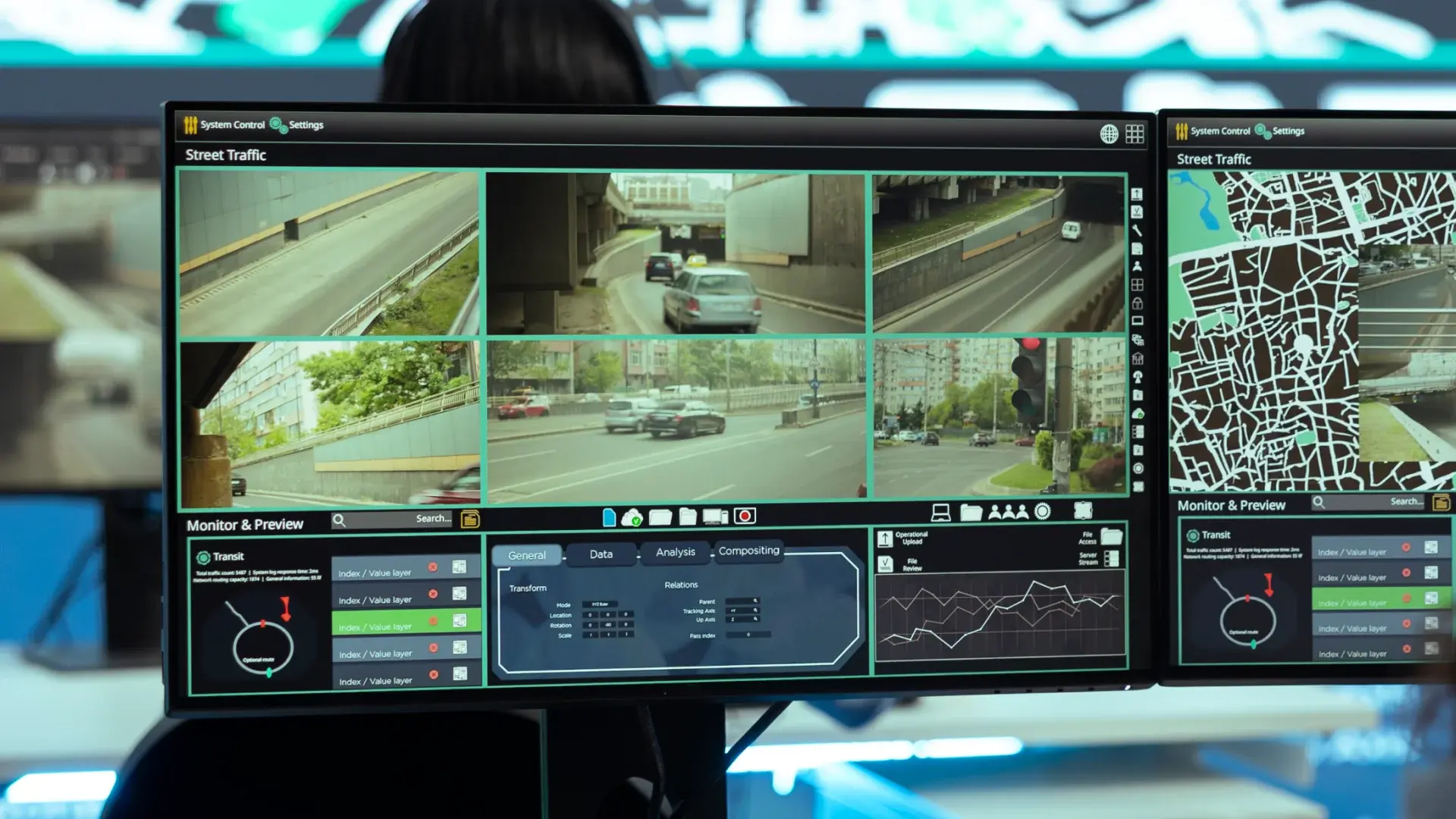
Digital evidence analysis is how investigators examine video, audio, image, and document evidence to find what matters for a case. AI now does much of the work that used to come before judgment: locating the relevant moments in a recording, transcribing what was said, pulling metadata out of files, and connecting findings across an entire case file. The investigator still decides what it means.
This shift happened because case volumes outgrew what humans can review by hand. A 2024 National Institute of Justice survey found agencies are sitting on months-long backlogs, mostly because of video. Separately, 69% of law enforcement professionals say they do not have enough time to manually review all the digital evidence in their active cases.
This guide explains what digital evidence analysis covers today, how AI applies to each evidence type, what to look for in a digital evidence management system, and how chain of custody and admissibility work when AI is in the loop.
What digital evidence analysis covers today
Digital evidence analysis is the day-to-day work of going through digital files for an investigation or legal matter. The files come from body cameras, dashcams, CCTV, mobile devices, drones, email systems, and case management platforms. The formats are video, audio, image, document, and metadata.
The practice has changed over the last five years. It used to mean watching footage, listening to recordings, and reading documents one at a time. Now it includes automated transcription, object detection, facial recognition, redaction, metadata extraction, and search across the full case file. That shift is what lets teams keep up with the volume modern cases produce.
Analysis is still a human practice. AI speeds the search and the sorting. The investigator decides what the findings mean.
Why manual analysis no longer scales
Collecting digital evidence is not the hard part anymore. Reviewing it is. A single case can pull in body-worn camera footage, dashcam recordings, CCTV feeds, drone video, smartphone extractions, emails, and PDFs. Every file has to be looked at before the case can move.
The NIJ data above shows where this lands in practice: months-long backlogs, and most investigators reporting they cannot get through the evidence they have.
More staff will not fix this. The problem is structural. Evidence volume grows faster than review capacity, and no hiring plan closes that gap. AI closes it by doing the parts of review that do not require investigative judgment: finding the moments worth watching, turning audio into searchable text, extracting metadata, and organizing files so investigators can spend their time on interpretation.
How AI analyzes digital evidence
Four technologies do most of the work in AI evidence analysis platforms today.
Computer vision reads visual content frame by frame. It recognizes faces, vehicles, license plates, weapons, and objects in video and image files. VIDIZMO DEMS uses this for object detection, so investigators do not have to scrub through footage looking for what appears in it.
Natural language processing (NLP) handles the audio and text side. It transcribes recordings, finds keywords in transcripts, and pulls relevant terms out of documents. VIDIZMO DEMS uses NLP to convert spoken content into searchable text across more than 82 languages, which means an investigator can search for a name, an address, or a specific phrase across hours of audio and get the timestamp back.
Machine learning pattern recognition connects findings across files and surfaces anomalies a linear review would miss. VIDIZMO DEMS uses it for AI-powered tagging and metadata extraction.
Generative AI is the newest layer. It lets investigators query an entire evidence library in plain language and get a synthesized answer. VIDIZMO DEMS does this through CaseBot. Ask "what did the witness say about the vehicle" and CaseBot pulls the relevant moments from across the case record.
AI also organizes evidence chronologically. VIDIZMO DEMS generates timeline markers across multimedia files so investigators can reconstruct events in sequence instead of scrubbing through raw footage. This matters most in cases with multiple recordings from different sources, where the question is what happened and in what order.
These technologies together convert unstructured evidence into something searchable, taggable, and correlatable across a case.
AI across the main evidence types
AI works differently on video than on audio, and differently again on images and documents. Each evidence type has its own questions, and the AI capabilities are tuned to those questions.
Video
Video is the highest-volume problem for most agencies. VIDIZMO DEMS runs video through transcription, object detection, facial recognition, and scene recognition, so investigators can search by what appears in the footage rather than scrubbing for it. Relevant segments surface in seconds across hours of material. The same approach works on body-worn camera footage, dashcam recordings, CCTV feeds, drone video, and interview room recordings.
Audio
Interview recordings, emergency calls, and recorded conversations get transcribed into searchable text on intake. VIDIZMO DEMS supports keyword search across transcripts, translation across 82 languages, and speaker diarization to identify who spoke when in a multi-party recording. Investigators can verify a statement, jump to a specific moment, and reference exact wording without listening to the full file.
Image
Crime scene photographs, surveillance stills, and mobile device images run through object detection and facial recognition in VIDIZMO DEMS. Image similarity analysis helps surface visual connections across a large image set that a linear review would not catch.
Document
PDFs, reports, and scanned files get indexed through AI-powered search and metadata extraction. Investigators can run natural language queries across the document set, locate the records that matter without reading each file, and pull summaries that speed up case preparation.
Cross-media correlation ties all of this together. If a name shows up in a transcript, a face shows up in surveillance footage, and a vehicle shows up in a dashcam recording, VIDIZMO DEMS connects the dots across files. Investigators see the relationship instead of having to find it themselves. That is where AI moves from speeding up individual reviews to supporting the case as a whole.
Across every evidence type, VIDIZMO Digital Evidence Management System keeps the files in one place, applies AI analysis consistently, and logs every action taken on each file.
What AI changes for each investigator role
Different investigators have different evidence problems, and AI applies differently to each one.
Law enforcement agencies carry the largest intake burden. Body cameras, dashcams, CCTV, drones, and citizen submissions come in across many active cases at once. VIDIZMO DEMS ingests evidence automatically from field devices, tags and transcribes on intake, and organizes files into searchable case structures. Agencies including the Adams County Sheriff's Office and DuPage County Illinois Sheriff's Office use VIDIZMO Digital Evidence Management System to manage body-worn camera footage, dashcam recordings, and surveillance evidence at scale.
Prosecution teams carry the disclosure burden. Under Brady v. Maryland and related rules, prosecutors have to review every piece of evidence for material content before trial and produce complete, properly redacted discovery for the defense. As evidence volumes grow, doing that by hand becomes harder to defend in front of a judge. VIDIZMO Digital Evidence Management System gives prosecutors AI-powered redaction, intelligent search across discovery sets, and secure multi-agency sharing that delivers evidence packages with controlled access and a full activity log.
Defense attorneys need to do their own review. Chain of custody has to hold up. Details the prosecution missed have to surface. VIDIZMO Digital Evidence Management System lets defense teams use AI to challenge prosecution evidence with the same search and analysis tools the prosecution has.
Internal investigations and corporate security teams handle fraud, misconduct, harassment, and compliance matters with the same volume problem at enterprise scale. VIDIZMO DEMS centralizes incident recordings and supporting documents, runs the same AI detection and transcription on them, and produces audit-ready reports without the manual review that ate weeks in the old workflow.
Chain of custody and admissibility when AI is involved
AI-analyzed evidence holds up in court when the analysis is documented, the original evidence is unchanged, and the investigator can explain what the AI did and what a human confirmed. A broken chain of custody is one of the fastest ways for evidence to be challenged or excluded, and AI does not change that.
VIDIZMO Digital Evidence Management System keeps an automated audit log of every access, action, and modification across a file's lifecycle, and exports it as a PDF or CSV chain of custody report for court. SHA-256 hash-based integrity verification catches any file change after collection, which aligns with NIST guidance and with Federal Rule of Evidence 902, recognizing hash-authenticated digital evidence as self-authenticating.
When AI-assisted findings come up in testimony, the investigator should be ready to explain what the system detected, what criteria it used, and what a human reviewed before the finding was relied on. The audit trails, detection logs, and access records are there to back that up.
Limitations and responsible use
AI detection and transcription work well on high-quality, well-captured evidence. They work less well as quality drops. Low-resolution footage, heavy accents, occluded faces, and multi-speaker audio all reduce accuracy and need closer human review.
Transparency is a legal requirement as much as a practical one. The CJIS Security Policy requires agencies handling criminal justice information to keep strict access controls, audit logs, and data protection in place across the whole workflow.
AI also makes review more consistent. Two investigators reviewing the same footage by hand may notice different things, tag findings differently, or use different search terms. Automated detection, transcription, and metadata generation cut down that variability. Teams get continuity across cases, shifts, and personnel changes. The investigator still has to apply judgment. AI gives everyone the same starting point.
Bias deserves a real answer. AI models trained on uneven data perform differently across demographic groups, lighting conditions, and recording quality. The practical response is to treat AI detections as leads, not conclusions. Verify them against the original evidence. Keep an audit trail showing what the AI returned and what a human confirmed. If a finding gets challenged, both pieces of that record are there to inspect.
Human judgment stays the final step at every decision point. AI handles the time-consuming work of locating and organizing evidence. Investigators handle interpretation, context, and case conclusions.
What to look for in an AI-powered digital evidence platform
Most platforms list the same features. The differences show up in how they handle the realities of investigative work. A structured selection guide helps cut through marketing claims, but a few criteria matter consistently:
- CJIS compliance for any platform handling criminal justice information, with access controls, audit logging, and encryption in transit and at rest
- SHA-256 integrity verification on intake and at every access, so any post-collection change is caught
- Automated chain of custody logging that exports as court-ready documentation, not something compiled by hand the night before trial
- Format support across the long tail of body camera, dashcam, CCTV, and mobile manufacturers, ingested without manual conversion
- Breadth of AI capabilities in one place so transcription, translation, detection, redaction, and search come as a platform rather than stitched-together point tools
- Deployment flexibility across cloud, hybrid, and on-premises to match different policy environments
- Role-based access control so investigators, prosecutors, defense, and command staff each see what their role requires
- Long-term evidence storage with cost-effective tiers and verified integrity across multi-year retention windows
VIDIZMO Digital Evidence Management System was built against these criteria and is deployed across federal, state, local, and enterprise environments at scale.
AI-powered digital evidence analysis in one platform
VIDIZMO Digital Evidence Management System (DEMS) brings the AI-driven evidence analysis tools into one CJIS-compliant platform. Agencies get AI transcription and translation across 82 languages, facial, object, and license plate detection, multi-format AI redaction, intelligent search through CaseBot, SHA-256 integrity verification, role-based access control, automated chain of custody, and cloud, hybrid, or on-premises deployment.
Investigators work faster, backlogs shrink, and evidence integrity holds across the case lifecycle.
Contact the team to talk through how VIDIZMO Digital Evidence Management System fits your investigative workflows, or start a free trial to use the platform directly.

Key Takeaways
- Digital evidence analysis covers the day-to-day review of video, audio, image, and document evidence for investigations and legal work, supported by computer vision, NLP, machine learning, and generative AI.
- Manual review does not scale to modern case volumes. AI handles search, transcription, and sorting so investigators can spend their time on judgment calls.
- Admissibility holds when the process is documented. Automated audit logs, SHA-256 integrity verification, and the kind of authentication recognized under Federal Rule of Evidence 902 are what make AI-assisted findings defensible in court.
- AI detections are leads, not conclusions. Bias, low evidence quality, and edge cases all require human verification against the original file.
- One CJIS-compliant platform handling intake, analysis, chain of custody, and retention moves agencies from evidence backlog to court-ready output faster than stitched-together point tools.
Why AI for Digital Evidence Analysis Is Now Essential
Investigators are not going to out-watch the evidence. Case volumes have already outgrown what manual review handles, and the gap widens every year. The agencies keeping up are the ones using AI to take the search, transcription, and sorting work off investigators' plates so they can spend their time on the judgment calls that actually need a human.
VIDIZMO Digital Evidence Management System (DEMS) is built for that work. The AI runs on intake. The evidence record stays defensible. The chain of custody compiles itself.
Ready to modernize your evidence analysis? Explore AI-powered capabilities with VIDIZMO Digital Evidence Management System (DEMS) and see how it fits into your workflow. Contact our team or Start a Free Trial.

People Also Ask
Digital evidence analysis is the day-to-day work of going through digital files for an investigation or legal matter. It covers video, audio, image, document, and metadata evidence from sources including body cameras, dashcams, CCTV, mobile devices, drones, and case management systems. AI now supports the process through transcription, object detection, search, and metadata extraction.
Computer vision identifies visual elements in video and images. NLP transcribes and analyzes audio and text. Machine learning detects patterns and anomalies across files. Generative AI synthesizes findings across files in response to natural language queries. Together they turn unstructured evidence into searchable, taggable data investigators can review across an entire case.
AI-analyzed evidence is admissible when the process is documented. Courts expect investigators to explain what the AI did, what criteria it applied, and what a human confirmed. Automated chain of custody logs, SHA-256 hash verification, and the kind of authentication recognized under Federal Rule of Evidence 902 are the documentation foundations that support admissibility.
AI surfaces relevant content in seconds across hours of video or audio that would otherwise need linear review. Time savings depend on case complexity and evidence quality, but the pattern is consistent: hours of manual scanning become minutes of targeted review, with investigators applying judgment to the segments the AI flags.
AI automates the review of body-worn camera footage, CCTV, dashcam recordings, and other digital evidence through object detection, transcription, metadata extraction, and intelligent search. Investigators locate relevant content in seconds rather than hours, which cuts backlogs and frees capacity for active casework.
AI evidence analysis platforms work with video, audio, photographs, images, PDFs, and scanned documents. Modern systems ingest evidence from body cameras, dashcams, CCTV, drones, interview room recorders, and mobile devices across hundreds of formats without manual conversion.
A digital evidence management system records every access, action, and modification on every file, including who viewed or edited it and when. SHA-256 hash verification catches any post-collection file changes. The records export as chain of custody reports for court without manual compilation.
About the Author

Jump to

How Law Firms Use AI to Replace Manual Video Review in Litigation

CCTV Footage as Legal Evidence: Management, Search, and Admissibility


No Comments Yet
Let us know what you think